
An unusually divided Federal Reserve on Wednesday held its key interest rate steady as policymakers grappled with the policy impact of persistent inflation and awaited a looming leadership transition at the central bank.
In what may have been Chair Jerome Powell‘s final meeting at the helm, the rate-setting Federal Open Market Committee voted to hold the benchmark funds rate in a range between 3.5%-3.75%. Markets had been pricing in a 100% chance of no change.
However, the meeting saw a dramatic turn amid a groundswell of officials who opposed messaging that further rate cuts could be ahead.
Amid expectations for a routine vote to hold the benchmark funds rate steady, the Federal Open Market Committee instead was split along 8-4 lines, with officials expressing different reasons for their vote.
The last time four FOMC members dissented was in October 1992.
Governor Stephen Miran, as he has done since joining the central bank in September 2025, dissented in favor of a quarter percentage point cut.
The other three “no” votes came from regional presidents Beth Hammack of Cleveland, Neel Kashkari of Minneapolis and Lorie Logan of Dallas. They said they agreed with the hold but “did not support the inclusion of an easing bias in the statement at this time.”
At issue for the trio was this sentence: “In considering the extent and timing of additional adjustments to the target range for the federal funds rate, the Committee will carefully assess incoming data, the evolving outlook, and the balance of risks.”
The phrasing indicates the likelihood that the next move would be lower, implied by using the word “additional,” which reflects that the most recent rate actions have been to cut. Hammack, Kashkari and Logan, along with several other Fed officials, have warned about the dangers of persistent inflation. Higher prices augur higher rates for the Fed, which has been on an easing bias since the latter part of 2025.
In the post-meeting statement, the committee noted that, “Inflation is elevated, in part reflecting the recent increase in global energy prices.”
Markets had been widely expecting the hold and in fact are pricing in no changes the rest of this year and well into 2027. Fed officials at the March meeting indicated they foresee one cut this year then another in 2027, putting the funds rate down to its expected “neutral” level around 3.1%.
The decision marked the third consecutive meeting where the committee chose to stand pat – following three consecutive cuts last year.
For most of his eight years as chair, Powell has been able to maintain strong consensus among the committee even as the Fed has struggled to contain inflation and resist aggressive White House political pressure.
Policymakers, though, face an economic climate where inflation indeed has held well above the Fed’s 2% target, as Trump’s tariffs and soaring energy prices are complicating policy. Normally, Fed officials would look through the temporary price shocks from both factors, but the duration of the surges has raised concern about the longer-lasting consumer impact.
On the other side of the Fed’s so-called dual mandate, concerns have abated over the low-hire low-fire labor market.
Nonfarm payrolls in March grew by a better-than-expected 178,000, while the unemployment rate slipped to 4.3%. For April, payrolls processing firm ADP has reported average weekly private payroll growth around 40,000, further indicating that the jobs picture is healthy if less than robust.
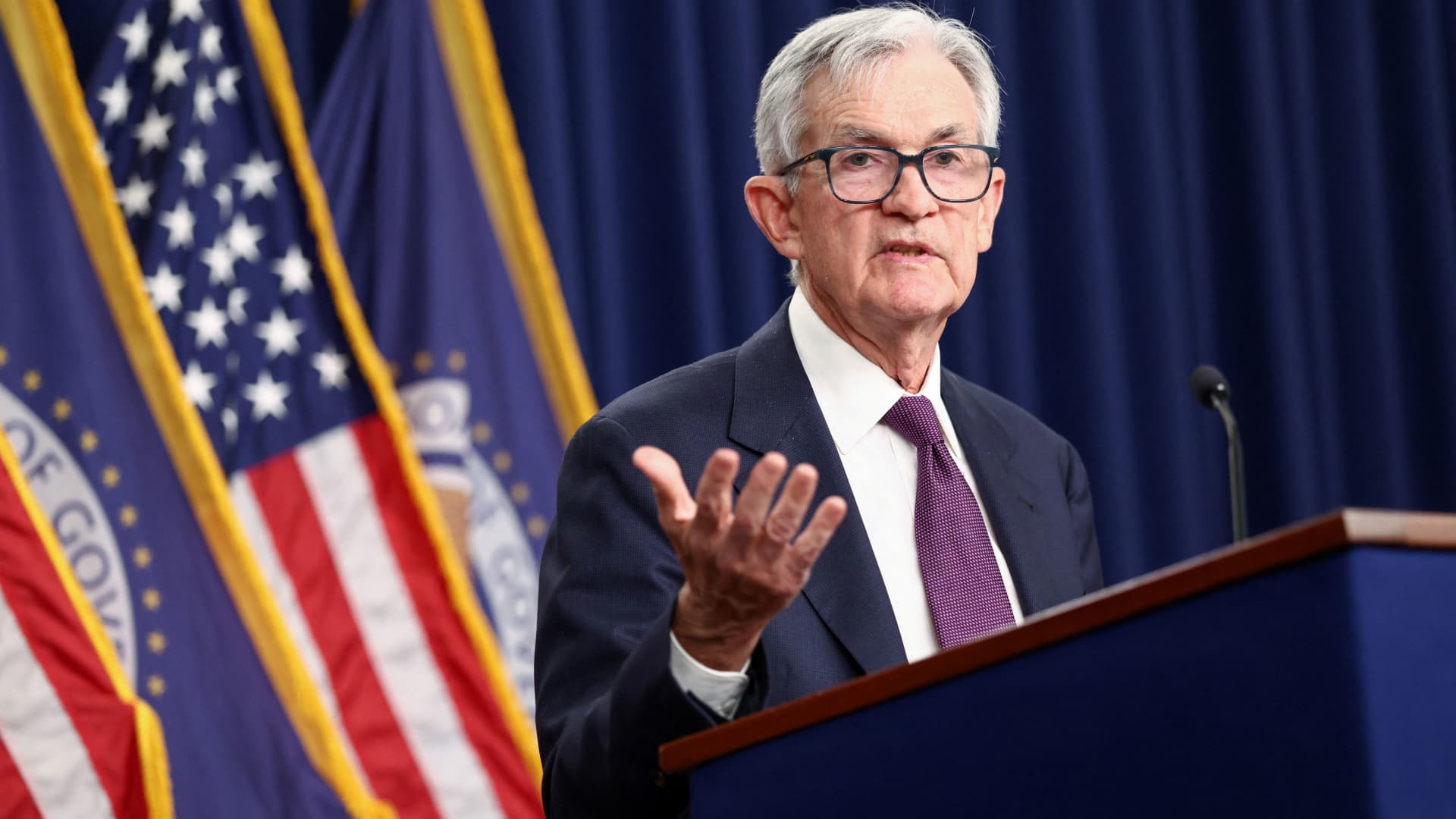
With the rate decision behind it, attention will quickly turn to Powell’s post-meeting news conference. Markets usually watch the chair’s remarks closely for clues about the future direction of policy, but in this case the most prominent question will be whether Powell will stay on board after his term as chair ends in May.
Earlier in the day, the Senate Banking Committee in a party-line vote advanced President Donald Trump’s nomination of Kevin Warsh as the next Fed chair. The full Senate is widely expected to follow suit, setting up the Fed’s first leadership change since Powell took over in 2018.
Powell faces a choice – leave now as Warsh comes on board, or serve out all or part of the remaining two years on his term as governor. Should Powell opt to stay, it would mark the first time a sitting chair didn’t leave the Board of Governors since Marriner Eccles in 1948.
Powell and Eccles faced similar challenges in the form of White House pressure on monetary policy. In Eccles’ case, President Harry S. Truman pushed the Fed to keep rates low to help reduce government borrowing costs. Trump has pressured the Fed to help the housing and labor markets, and to help reduce the financing burden of the nation’s nearly $39 trillion national debt.
In the Eccles era, the clash led to the 1951 Treasury-Fed Accord, which helped formalize the Fed’s independence by creating a clear barrier between the two institutions.
Warsh has spoken of reopening the accord and modernizing it for the current era where the central bank’s fixed income holdings total some $6.7 trillion. The chair-elect has advocated strengthening the relationship with better coordination on debt issuance while furthering Warsh’s goal of lessening the Fed’s imprint in the bond market.
Powell has spoken strongly about Fed independence. A Justice Department effort to subpoena him over the Fed building renovation project has failed thus far, and a criminal probe into the matter has been dropped.
Among his reasons to stay would be to wait until the renovations probe – which U.S. Attorney Jeanine Pirro handed off to the Fed’s inspector general – is finished. Also, there are ongoing issues regarding independence that Powell could resist as a governor, among them the potential replacement of regional Fed presidents.